What Audio Plugin Studios Don't Want You to Know is Happening
The companies that spent twenty years selling $200 plugins are quietly panicking. Here's what's actually happening in plugin land, category by category, with the prices side by side so you can judge for yourself.
Look closely at the pro audio market right now and you'll notice something strange. Plugins that held $200 price tags for a decade are permanently "on sale" for $30. Companies that swore by perpetual licenses are pushing subscriptions hard. Bundles keep getting bigger while the price keeps dropping.
That's not generosity. That's what an industry looks like when its pricing power is collapsing. A new generation of developers is shipping tools that match the classics for a tenth of the money, and the old guard knows it.
- Legacy plugin pricing is cracking: permanent flash sales and subscription pivots are symptoms, not deals.
- The cause is structural. Processing power, modern development speed, and direct distribution removed the costs that justified $200 to $400 plugins.
- Category by category, modern alternatives now cover pitch correction, EQ, compression, noise removal, and resonance suppression at around $50 each.
- The gap is roughly ten to one, and it's widening in favor of the cheap side.
The signs are everywhere once you look
Nobody sends a press release announcing their pricing model is dying. But the evidence is public:
- The permanent sale. Plugins with $150 to $250 list prices now spend most of the year discounted 70 to 90 percent. When the sale never ends, the list price is fiction.
- The subscription pivot. Several of the biggest names now push $25-a-month subscriptions as the primary way to access catalogs they used to sell outright. Recurring revenue is what you reach for when one-time sales stop covering the burn.
- Bundle inflation. Suites that once cost thousands keep absorbing more plugins at lower prices, hoping volume hides the per-plugin collapse.
- Upgrade and licensing friction. Paid "update plans" and hardware dongle requirements squeeze existing customers because winning new ones got harder.
None of these moves are about serving musicians better. They're about defending a price structure that no longer matches what the software costs to build.
What changed under the hood?
Three shifts happened in a few short years, and each one knocked a leg out from under legacy pricing.
- The DSP moat drained. The signal processing behind the classic tools is well understood now, and the compute that once needed dedicated hardware runs on any laptop. What was proprietary magic in 2005 is an engineering problem with known solutions in 2026.
- Development got radically faster. Modern, AI-assisted workflows let a small team build, test, and refine a serious plugin in months instead of years, then ship improvements continuously. Legacy companies still work on multi-year release cycles with paid upgrades.
- Distribution went direct. New developers sell straight to artists. No distributor cut, no retail margin, no enterprise sales team baked into the price of your compressor.
Put those together and the honest price of a professional plugin lands somewhere around $50, not $250. One company built on exactly that math is Rys Up Audio: eighteen plugins live, every one priced at $49.99, Mac and Windows, AU, VST3, and AAX, no hardware dongle, with a full-suite subscription at $9.99 a month. Let's put their tools next to the legacy standards, category by category, and let the screenshots do the talking.
Pitch correction: the $399 monopoly falls first
No category shows the collapse better. The classic name here is Antares Auto-Tune Pro at a $399 list price, with Waves Tune Real-Time listed at $299. For twenty years, that tuned-vocal sound meant paying one of those tolls.

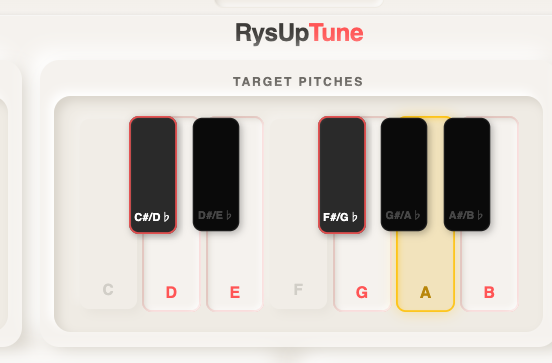
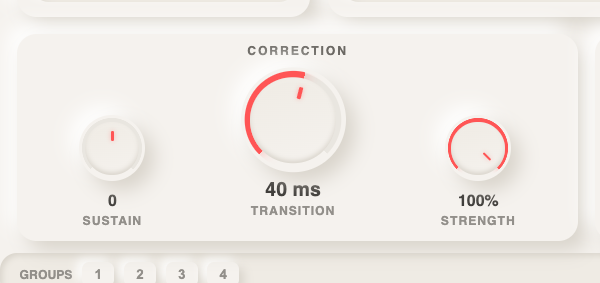
RysUpTune covers that same territory for $49.99. Real-time correction with sub-10ms latency, a target-pitch keyboard, scale snapping, formant and shift control, and the one knob that matters most: transition speed, which takes you from invisible correction to the hard-snapped effect that defines modern hooks.
Surgical EQ: the $199 workflow, rebuilt
The modern EQ workflow (grab the curve, watch the spectrum, drag bands until the problem is gone) was defined by FabFilter's Pro-Q line, currently at $199 for Pro-Q 4. It earned its reputation. It also costs four times what the workflow needs to cost now.

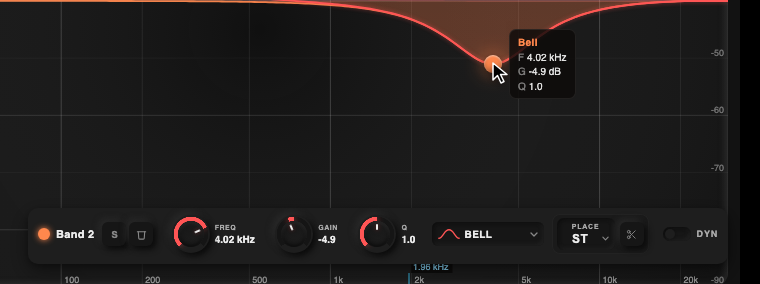
RysUpEQ delivers that workflow for $49.99: click-to-create bands, a live spectrum analyzer, spectrum matching, sketch-a-curve, dynamic per-band behavior, A/B slots, and zero-latency mode. Every band reports its exact frequency, gain, and Q while you drag.
Compression: four studio flavors in one $50 plugin
Legacy compression pricing splits by flavor. A modern clean compressor like FabFilter Pro-C 3 lists at $199. Cytomic's The Glue is $99. Waves' Renaissance Compressor lists at $99 before its perpetual sale. And if you want the classic optical and FET studio characters, the big names sell each personality as its own plugin.

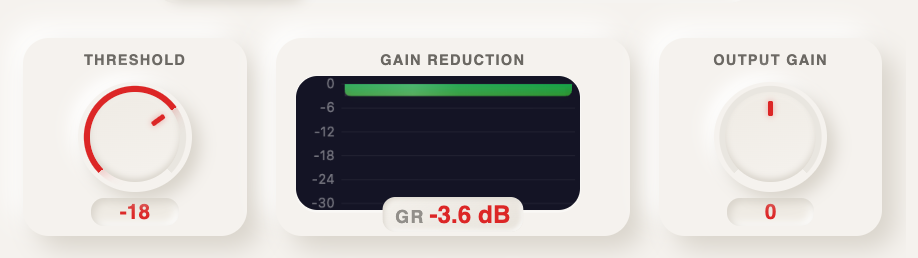
RysUpComp packs four models into one $49.99 plugin: a clean modern VCA plus three optical and FET-style characters modeled on the studio classics. Threshold, ratio, attack, release, mix, and trim, with a live gain reduction meter front and center.
Noise removal: one fader instead of $149
Waves NS1 made one-fader noise suppression famous, typically listed around $149. It's a brilliant idea: a single control that pulls room noise out of a vocal in real time.
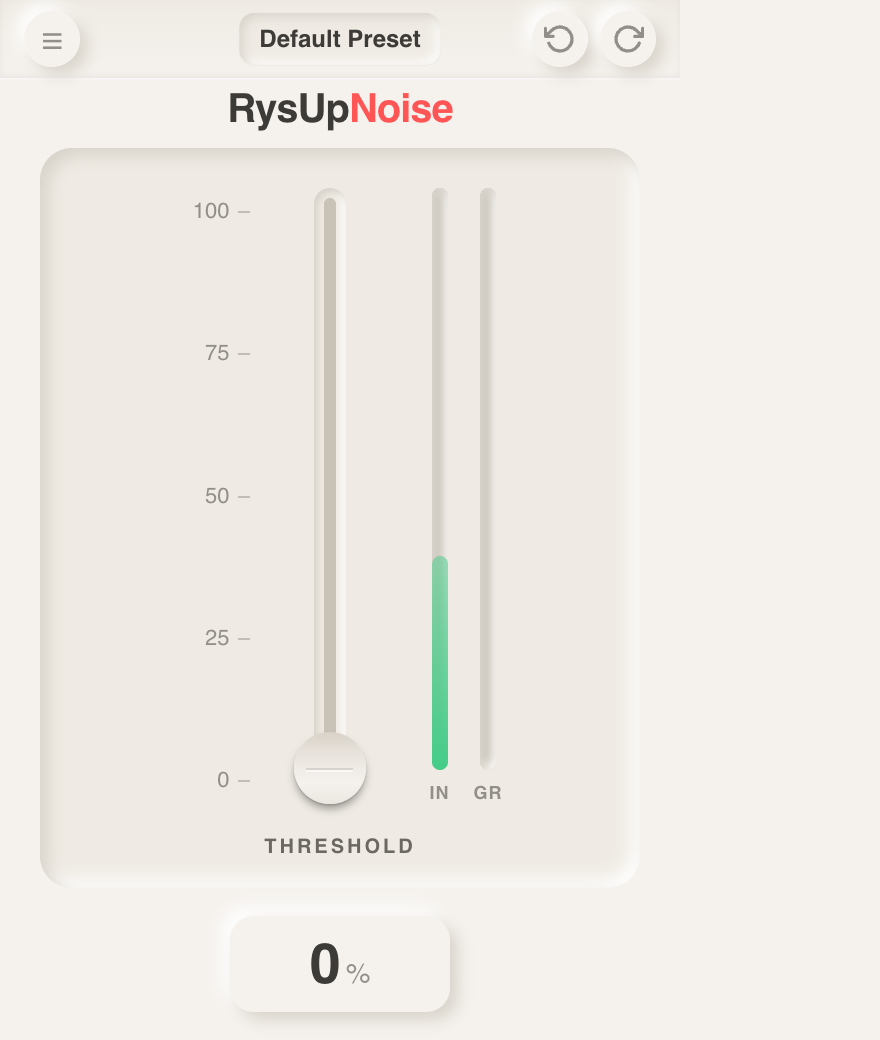
RysUpNoise does the same job for $49.99, and in our published speech tests it holds vocals more transparently while cleaning the gaps. There is no learning curve on purpose: one fader, watch the meters, done.
This category matters more than it looks. Most home recordings don't fail because of the microphone; they fail because of the room behind it. Computer fans, air conditioning, street bleed. A transparent noise gate running first in the chain is the cheapest sound upgrade most bedroom recordings can get, which is exactly why the one-fader idea earned its reputation in the first place.
Resonance suppression: the $200+ secret weapon
The pros' favorite quiet weapon is the resonance suppressor, a dynamic EQ that hunts harsh frequencies automatically. oeksound defined the category, and its current flagship soothe3 lists around $259, with the classic soothe2 at $219 before it.
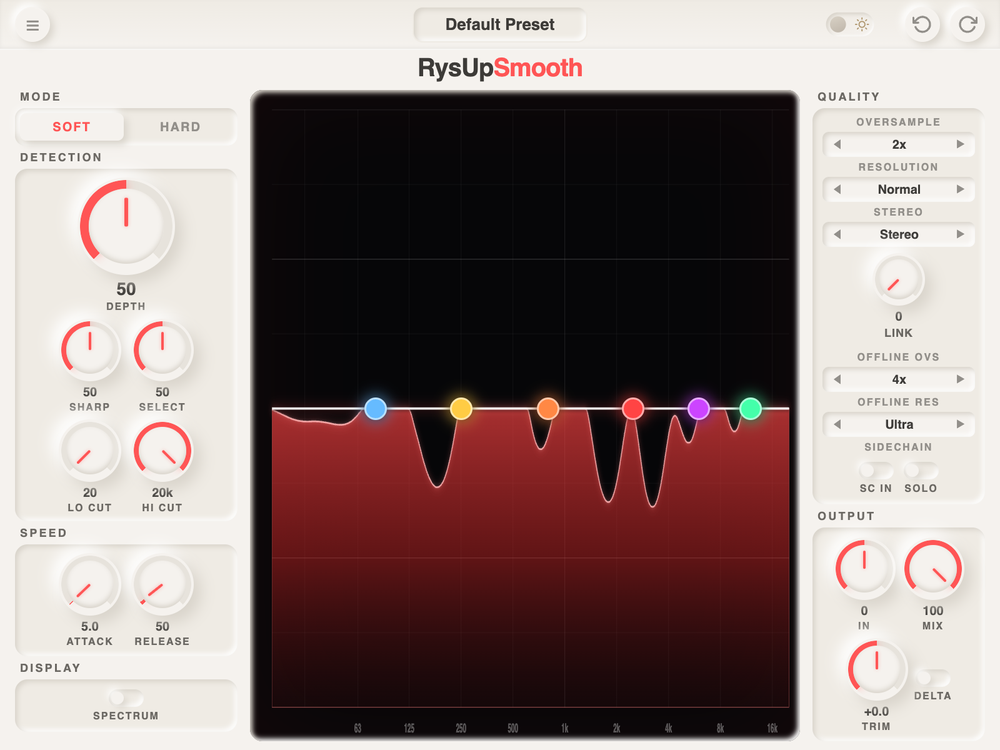
RysUpSmooth brings that processing to $49.99: soft and hard modes, sharpness and selectivity control, adjustable detection range, oversampling, and a delta mode so you can hear exactly what it's removing. Watch the red curve while a harsh vocal plays and you can see it working in real time.
The math they'd rather you didn't do
Here's the whole story in one table, using list prices from the companies' own stores:
| Category | Legacy standard | List | Modern alternative | Price |
|---|---|---|---|---|
| Pitch correction | Auto-Tune Pro | $399 | RysUpTune | $49.99 |
| Surgical EQ | FabFilter Pro-Q 4 | $199 | RysUpEQ | $49.99 |
| Compression | FabFilter Pro-C 3 | $199 | RysUpComp | $49.99 |
| Noise removal | Waves NS1 | ~$149 | RysUpNoise | $49.99 |
| Resonance suppression | oeksound soothe3 | ~$259 | RysUpSmooth | $49.99 |
| Total | ~$1,205 | $249.95 |
List prices checked against official stores in mid-2026. Legacy plugins spend much of the year on sale, which is part of the point.
And that's the conservative comparison, because the alternative side also comes as a subscription: every Rys Up plugin, current and future, for $9.99 a month on the annual plan. The two free entries (RysUpAir, an air-band exciter, and RysUpRack, a full chain host) drop the cost of trying any of this to zero.
How this comparison was made
Every interface capture in this article is a real, unedited screen recording of the shipping plugin, cursor and all. Nothing is mocked up, and nothing is a marketing render. The animated clips show actual parameter changes: you can watch the gain reduction meter respond to the threshold, the EQ curve reshape as bands move, and the tuner's scale readout update as target notes change.
Prices are list prices pulled from each company's own store in mid-2026. Where a company gates its checkout or runs rotating sales, the price is marked as approximate rather than quoted to the cent. That's deliberate: sale prices change weekly, list prices are the claim a company actually makes about what its product is worth, and the gap between the two columns is wide enough that no sale closes it.
Do the alternatives actually hold up?
Fair question, and the honest answer is: check for yourself, because the receipts are public. A few concrete things worth knowing:
- Formats and platforms are identical. AU, VST3, and AAX on both Mac and Windows, so they load in Logic, FL Studio, Ableton, Pro Tools, Cubase, Reaper, and Studio One like anything else.
- No dongle, no update tax. No hardware key requirement, and updates ship continuously instead of behind paid upgrade plans.
- Real users, real volume. The company reports 3,800+ published customer reviews across its store, and the free plugins mean you can hear the engineering quality before spending anything.
- The pace is the tell. These tools improve monthly. Legacy plugins improve when the next paid version ships.
Where this goes next
The part the legacy companies really don't want you to know is that this isn't a one-time price war. It's a new production function. When a serious plugin takes months instead of years to build, catalogs grow fast: Rys Up went from zero to eighteen plugins in under a year, and the stated roadmap points at hundreds. Every new release at $49.99 makes another $200 price tag harder to defend.
Once that flywheel is spinning, the old model doesn't come back. Prices don't recover. The only question is how long the flash-sale life support lasts.
For working musicians, the practical takeaway isn't ideological. Keep the legacy tools you already own and love; they still work. But the next time a $250 plugin lands in your cart, check whether a $50 alternative covers the same job first. In 2026, the answer is yes more often than the old guard would like.
Are cheap plugins lower quality by definition?
No. Price used to track R&D scarcity and distribution cost. Both collapsed. Judge tools by what they do on your material, not by what they cost.
Why do legacy plugins still sell?
Habit, tutorials, and studio inertia. Professionals already own them, and twenty years of YouTube references keep new buyers walking the old path.
Is subscription or outright the better deal?
If you want two or three tools, buy them outright at $49.99. If you want the whole toolbox and the future releases, $9.99 a month on the annual plan is hard to argue with.
What should I try first?
The free ones. RysUpAir on your vocal bus and RysUpRack as a chain host cost nothing and tell you everything about the build quality.
The bottom line
The audio plugin industry ran on scarcity for twenty years: scarce DSP knowledge, scarce distribution, scarce competition. All three are gone. What's happening now, quietly, behind the permanent sales and the subscription pushes, is a full repricing of professional sound.
You can wait for the legacy names to finish discounting their way down to reality. Or you can pocket the difference today, put the same processing on your next record, and spend the savings on music.